
Table of Contents
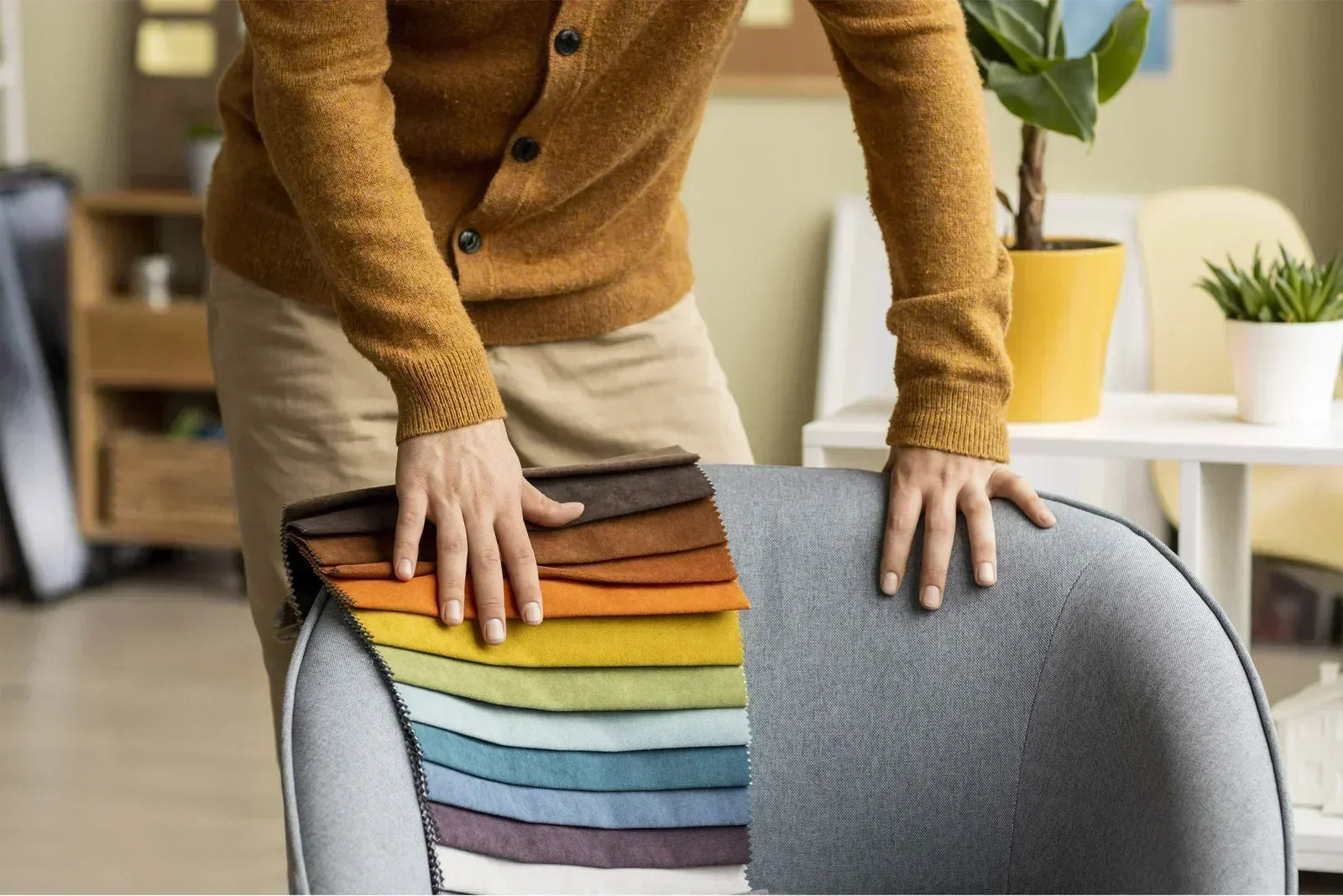
When it comes time to choose an office chair, armchair, or bench for a commercial space, one detail always comes up in the discussion: the type of upholstery. Fabric, vinyl, leather... and the famous classes or grades (e.g., 1 to 5, or A to E). It's not always easy to navigate.
In this article, we explain the difference between these materials, why some are more expensive than others, and what upholstery grades mean in the world of commercial furniture.
Key Takeaways
- Material Matters: Fabric offers versatility and comfort, vinyl excels in maintenance and durability, while leather provides luxury and prestige
- Grades Indicate Cost, Not Quality: Upholstery grades (1-5 or A-E) reflect pricing tiers based on material cost and complexity, not performance
- Choose Based on Use: High-traffic areas benefit from vinyl, private offices suit fabric, and executive spaces call for leather
- Maintenance Considerations: Vinyl is easiest to clean, fabric requires more care, and leather needs specialized maintenance
- Budget Impact: Upholstery choice can affect furniture pricing by 20-60%, making it a strategic decision
Fabric, Vinyl, Leather: What Are the Differences?
1. Fabric: Versatility and Comfort
Fabric is one of the most commonly used upholsteries in office furniture. There are hundreds of types, woven in different ways, with natural, synthetic, or blended fibers.
Advantages of Fabric:
- Wide variety of textures, colors, and patterns
- Breathable comfort (less hot in summer)
- Can be very durable when well-chosen (e.g., high-performance polyester, Crypton, etc.)
- Excellent for sound absorption in open offices
Disadvantages:
- Less easy to clean than vinyl
- Can absorb liquids and odors if untreated
- Less suitable for medical environments or very high-traffic areas
👉 Ideal for: private offices, meeting rooms, residential or semi-commercial furniture
2. Vinyl: The Maintenance Champion
Vinyl is a synthetic upholstery that often imitates leather but at a lower cost. It's an excellent choice for high-traffic environments or places where hygiene is paramount.
Advantages of Vinyl:
- Easy to clean with a damp cloth
- Resistant to stains, moisture, and bacteria
- Available in a wide range of finishes (smooth, grained, matte, glossy, etc.)
- Cost-effective for large-scale commercial projects
Disadvantages:
- Less breathable (can stick to skin during long periods)
- Less supple to the touch than some fabrics or genuine leathers
- Can crack over time if low quality
👉 Ideal for: clinics, waiting areas, cafeterias, high-traffic zones
3. Genuine Leather: Luxury and Durability
Leather is a natural, noble material, often associated with prestige. It's tanned from animal hide, then treated to last over time.
Advantages of Leather:
- Premium, natural, and timeless appearance
- Very resistant to wear when of good quality
- Becomes more beautiful over time (develops patina)
- Easy to wipe clean for routine maintenance
Disadvantages:
- Higher cost
- More sensitive to scratches, light, and certain cleaning products
- Less used in large-volume commercial projects for budgetary reasons
- Requires specialized care products
👉 Ideal for: executive offices, high-end armchairs, conference rooms
Office Furniture Upholstery Comparison
To help you choose the right material, here's a detailed comparison:
| Material | Durability | Comfort | Maintenance | Cost Range | Best Applications |
|---|---|---|---|---|---|
| Fabric | Moderate to High | Excellent (breathable) | Moderate (requires regular cleaning) | $$ | Private offices, meeting rooms, low-traffic areas |
| Vinyl | High | Good (less breathable) | Excellent (wipe clean) | $ to $$ | Waiting rooms, cafeterias, healthcare, high-traffic |
| Leather | Very High | Excellent (supple) | Moderate (specialized care) | $$$$ | Executive offices, boardrooms, luxury spaces |
| Performance Fabric | Very High | Excellent | Good (stain-resistant treatments) | $$$ | Active workspaces, collaborative areas |
| Faux Leather | Moderate | Good | Good | $$ | Budget-conscious projects, residential |
Legend: $ = Budget | $$ = Mid-range | $$$ = Premium | $$$$ = Luxury
Why Grades? And What Do They Mean?
When you shop for commercial furniture, you often see mentions like Grade 1, Grade 3, or Category A, B, C, etc. These terms designate the upholstery classification according to cost and complexity.
💡 Important to understand: the grade does NOT measure upholstery quality. It's an economic classification used by manufacturers to adjust furniture pricing according to the chosen material.
Example: One Chair, Multiple Prices
A chair might cost $425 in Grade 1 fabric but $685 if covered in Grade 5 leather. It's the same product, same structure, same ergonomics—only the finish changes.
How Are Grades Determined?
Grades are established based on:
- Raw material cost (leather costs more to produce than polyester fabric, for example)
- Required treatment level (fire resistance, abrasion resistance, liquid resistance)
- License or exclusive design rights in the case of certain high-end fabrics
- Manufacturing complexity (a highly textured or stretch vinyl can be more difficult to sew)
Each manufacturer has its own grid. For example:
- Grade 1 to 5: 1 being the least expensive, 5 the highest
- Categories A to E: A being economical, E being premium
Understanding Furniture Fabric Grades in Practice
Grade 1-2 (Entry Level):
- Basic commercial fabrics and vinyls
- Solid colors or simple patterns
- Suitable for budget-conscious projects
- Performance meets standard commercial requirements
Grade 3 (Mid-Range):
- Enhanced performance features
- Wider color and pattern selection
- Better abrasion ratings
- Popular choice for most office environments
Grade 4-5 (Premium):
- Designer fabrics with exclusive patterns
- Superior performance characteristics
- Luxury textures and finishes
- Often includes eco-friendly or specialized materials
How to Choose the Right Upholstery for Your Project?
Here are some questions to ask:
- Who will use the furniture? (employees, patients, clients)
- What is the traffic level of the space? (intensive or moderate)
- Is easy maintenance an essential criterion?
- What style are you looking for? (modern, warm, professional)
- What is your budget? (upholstery can vary the final price by 20 to 60%)
- Are there specific hygiene requirements? (healthcare, food service)
- What is the expected lifespan? (temporary setup vs. long-term investment)
💡 A good commercial furniture consultant will help you find the balance between aesthetics, performance, and budget. Sometimes, a very high-performance Grade 1 fabric can do an excellent job. Other times, investing in an antibacterial Grade 3 vinyl is a strategic decision.
Special Considerations for Office Chair Upholstery
When selecting office chair upholstery specifically, additional factors come into play:
Ergonomic Considerations
Breathability: For chairs used 8+ hours daily, breathable fabrics help regulate temperature and prevent discomfort. Mesh backs combined with fabric seats offer excellent ventilation.
Stretch and Flexibility: Office chair upholstery must accommodate movement without restricting the chair's ergonomic adjustments. Look for materials with some give, especially for waterfall seat edges.
Weight Distribution: Premium upholstery fabrics designed for task seating include reinforced construction in high-pressure areas like the seat pan center.
Performance Standards
Quality office chair upholstery should meet or exceed:
- Abrasion resistance: Minimum 100,000 double rubs (Wyzenbeek test)
- Colorfastness: Resistance to fading from light and cleaning
- Flammability: Meet commercial fire safety standards (CAL 117, NFPA 260)
Maintenance Tips by Material Type
Fabric Care
- Vacuum weekly to prevent dirt embedding
- Spot clean spills immediately with appropriate cleaners
- Professional cleaning annually for high-use furniture
- Apply fabric protector treatments for added stain resistance
Vinyl Maintenance
- Wipe down daily with mild soap and water
- Avoid harsh chemicals that can damage the surface
- Use vinyl conditioners periodically to prevent cracking
- Repair small tears promptly to prevent expansion
Leather Upkeep
- Dust regularly with a soft, dry cloth
- Clean with leather-specific products monthly
- Apply leather conditioner every 6-12 months
- Keep away from direct sunlight and heat sources
Conclusion: Fabric, Vinyl, or Leather—A Strategic Decision
The choice of upholstery is more than an aesthetic detail. It has a direct impact on durability, maintenance, comfort, and price of your office furniture.
Understanding the difference between fabric, vinyl, and leather—and what grades mean—allows you to make an informed and profitable choice, both for your company's image and your employees' comfort.
FAQ – Office Furniture Upholstery
What does "double rub" mean in fabric testing?
Double rub is a standard measure of abrasion resistance. One double rub equals one back-and-forth motion across the fabric. Commercial-grade fabrics should withstand at least 100,000 double rubs, while heavy-duty options exceed 250,000.
Can I mix different upholstery grades in one office?
Absolutely! Many businesses use higher-grade materials for executive areas and reception while choosing practical, lower-grade options for back offices and high-traffic zones. This strategy optimizes both budget and performance.
Are eco-friendly upholstery options available?
Yes, many manufacturers now offer sustainable options including recycled polyester fabrics, plant-based leather alternatives, and materials with environmental certifications like Greenguard or Cradle to Cradle.
How long should commercial furniture upholstery last?
With proper care, fabric upholstery typically lasts 5-7 years, vinyl 7-10 years, and quality leather 10-15+ years. Actual lifespan depends on usage intensity and maintenance practices.
What's the difference between genuine leather and bonded leather?
Genuine leather is made from animal hide with natural grain intact. Bonded leather is made from leather scraps ground up and bonded to a fabric backing—it's less durable and prone to peeling. For commercial use, choose genuine leather or quality vinyl instead.
Can upholstery be replaced on existing furniture?
Yes, reupholstering is often cost-effective for quality furniture frames. It extends furniture life, allows style updates, and is more environmentally friendly than replacement. Ask your supplier about reupholstery services.
Do darker colors hide stains better?
While darker colors may camouflage some staining, they also show dust, lint, and wear patterns more visibly. Medium tones and patterned fabrics often provide the best balance for concealing everyday wear.
What are performance fabrics?
Performance fabrics are specially engineered for durability and stain resistance. Brands like Crypton, Sunbrella, and Revolution offer treatments that repel liquids, resist stains, and maintain appearance longer than standard fabrics—ideal for commercial environments.
Need Help Choosing the Right Upholstery?
At Solutions M3, our trained consultants guide you through upholstery and material selection. Come touch, compare, and test in our showroom. Can't visit in person? Contact us to obtain samples or a quick, free quote.